
Showing posts with label history. Show all posts
Showing posts with label history. Show all posts
23 April 2012
Gettysburg Trip 2012
Professor Jeffrey LaMonica(History) took his American Civil War and Reconstruction class to Gettysburg on 20 April. Stops on the Gettysburg Battlefield were Little Round Top, Seminary Ridge, and Cemetery Hill.


07 March 2012
Civil War Living History
Civil War living historian Tom Davis gave a presentation on African-American soldiers in the Union Army to students in Professor Jeffrey LaMonica's American Civil War and Reconstruction class on 7 March.

 Tom Davis Displays Photographs of His Civil War Ancestors

 Tom Davis Displays Photographs of His Civil War Ancestors
10 November 2011
Constitution Center and African-American History Museum

Professor Adriana Bohm(Sociology) and Professor Jeffrey LaMonica(History) took students from their bundled Experiences in Diversity and World Civilizations courses to the Constitution Center and the African-American History Museum in Philadelphia on 10 November 2011.
16 April 2011
Gettysburg Trip April 2011
Professor Ife Williams(Political Science) and Professor Jeffrey LaMonica(History) led a group of DCCC students to Gettysburg on 15 April 2011. The trip included a visit to the boarding house in Chambersburg, PA where John Brown planned his 1859 raid on Harper's Ferry, WV. Stops on the Gettysburg Battlefield were Little Round Top, Seminary Ridge, and Cemetery Hill.

 John Brown's Room
 DCCC Students at Seminary Ridge
 The Group on Little Round Top
04 November 2010
The African Roots of the Blues
University of the Arts literature professor and Blues guitarist Chris Devenny gave a talk/performance on the African roots of American Blues music on 27 October in the Large Auditorium. The DCCC Student History Club and Public Service and Social Sciences Division sponsored the event.
24 September 2010
Professor James Robertson(History) Hosts a Seminar at Temple
James Robertson(History) was selected to present a six week seminar for the Temple University Life Long Learning on the Renaissance and an eight week seminar on the Holocaust for the Kol Ami Synagogue in Elkins Park. This is the second seminar he has put on for Temple University, having done a six week seminar in the spring on the Holocaust which included four survivors in the group attending the function.
Professor LaMonica(History) Attends Conference in Kansas City
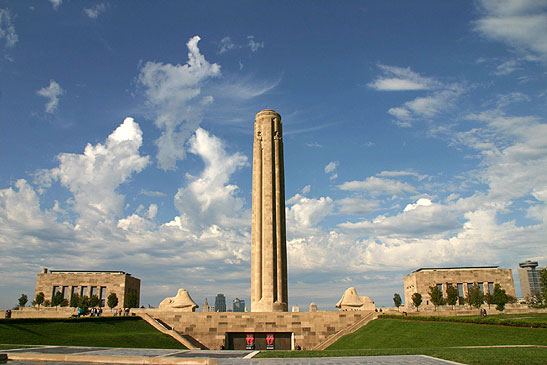 The National World War I Museum
Professor Jeffrey LaMonica(History) attended the joint National Seminar of the Western Front Association and the Great War Society at the National World War I Museum in Kansas City, MO on 10 and 11 September. The seminar was entitled The Men and Women of the Great War. Presentation topics included, US Army officer training for African-Americans, US Army Nurses in Europe, and the Austro-Hungarian Army. LaMonica serves as secretary of the Western Front Association.
02 July 2010
LaMonica(History) Attends WWI Seminar
Professor Jeffrey LaMonica(History) attended the East Coast Chapter of the Western Front Association's Spring Seminar at Fort Meade, Maryland on 5 June 2010. Topics included the US Signal Corps, American tank production, the burial and commemoration of American dead, and the Irish Uprising of 1916. The chapter presented Professor LaMonica with a certificate of appreciation for his service to the organization.
 Professor LaMonica poses with the Five of Hearts, a Renault FT-17 tank used by the US Army in World War One on display at the Fort Meade Museum
23 April 2010
The History of Cable Television
 The DCCC Student History Club invited DCCC alumnus Joseph DiJulio to speak about The History of Cable Television on 22 April.
Air Power in World War I

The DCCC Student History Club held a seminar on Air Power in World War I by Steven Suddaby, editor of French Strategic and Tactical Bombardment Forces of World War I on 9 March. Suddaby spoke about the history and development of aircraft, how aircraft changed war tactics, and how aircraft was a crucial part of the Allied victory in the Great War.
Suddaby presented images of kite balloons used to observe enemy lines miles away. He explained how balloons were tethered to the ground with ropes and sent Morse code through cable lines. Balloon crews directed the fire of artillery batteries on the ground.
Airplanes were originally used to take aerial photos of enemy territory. Suddaby explained how this set off the development of camouflage. Ground forces threw nets over railways and built wooden vehicles to fool enemy observation planes.
Suddaby talked about the development of aviation in ground and naval tactics. Naval observation aircraft helped Allied navies overcome the German submarine threat.
Suddaby concluded that aviation had a substantial impact on the outcome of World War I and dictated how armies and navies fought future wars.
24 January 2010
Haiti Relief


Kudos to the DCCC Student History Club for raising over $500 in four days for Haiti Relief!
18 November 2009
Professor Tony Makowski's (History) Movie Picks
A Man For All Seasons (should be mandatory viewing in college)
Downfall (one of the better films about the collapse of a regime - an evil one at that)
All Quiet on the Western Front (enough said)
Danton (the subtitles are killer - but the depiction of the French Revolution is quite good)
Goodbye Lenin (for a bit of humor)
Downfall (one of the better films about the collapse of a regime - an evil one at that)
All Quiet on the Western Front (enough said)
Danton (the subtitles are killer - but the depiction of the French Revolution is quite good)
Goodbye Lenin (for a bit of humor)
13 November 2009
Dr. Joseph Myers' (History) Movie List
Movies of 1990s and 2000s that Professors Want their Students to See Before they are Out of College
1990s
Braveheart (1995)
*Elizabeth (1998)
*Fight Club (1999)
The Matrix (1999)
Jurassic Park (1993)
New Jack City (1991)
*Schindler’s List (1993
Shawshank Redemption (1994)
Titanic (1997)
American History X (1998)
Bonus: Life is Beautiful (1997)
2000s
*Billy Elliot (2000)
Castaway (2000)
*Chocolat (2000)
Dark Knight (2008)
Eternal Sunshine of the Spotless Mind (2004)
Gladiator (2000)
*O Brother Where Art Thou (2000)
The Pianist (2002)
Series: 28 Days and Weeks
Series: Bourne Series
Series: Lord of the Rings and Harry Potter
Apocalyptic Movies 90s and 00s : Armageddon, Deep Impact, The Day After Tomorrow, I am Legend
1990s
Braveheart (1995)
*Elizabeth (1998)
*Fight Club (1999)
The Matrix (1999)
Jurassic Park (1993)
New Jack City (1991)
*Schindler’s List (1993
Shawshank Redemption (1994)
Titanic (1997)
American History X (1998)
Bonus: Life is Beautiful (1997)
2000s
*Billy Elliot (2000)
Castaway (2000)
*Chocolat (2000)
Dark Knight (2008)
Eternal Sunshine of the Spotless Mind (2004)
Gladiator (2000)
*O Brother Where Art Thou (2000)
The Pianist (2002)
Series: 28 Days and Weeks
Series: Bourne Series
Series: Lord of the Rings and Harry Potter
Apocalyptic Movies 90s and 00s : Armageddon, Deep Impact, The Day After Tomorrow, I am Legend
Math Makes History at DCCC
Recently, the DCCC Student History Club, Campus Life, the Public Service and Social Sciences Division, and the Math Division hosted speakers from the Battleship New Jersey. Two members of the Battleship New Jersey Museum and Memorial, Michael Flynn and Roger Willig, spoke about the battleship’s history and explained how algebra helped win WWII. The DCCC Student History Club was given a chance before the seminar to speak with them and more information about the speakers and the museum.
History Club: What is your job at the Battleship New Jersey?
Michael Flynn: I am the Director of Education at the museum. I have been there for two years. I am in charge of our on-board classes, which students of all ages enjoy, and the school outreach program, which brings the “ship” to the schools in presentations like today.
Roger Willig: I was a battleship tour guide for many years, and now I volunteer for the school outreach program. I was also a Professor of Math at Montgomery County Community College for twenty years.
History Club: Can you give us some interesting facts about the ship’s history?
Michael Flynn: The Battleship New Jersey was the longest battleship ever made. It had the largest guns and it is the most decorated American battleship with nineteen battle stars from WWII and Korea. It was the only battleship used in the Vietnam conflict. In 1991, the Battleship New Jersey was “mothballed” (decommissioned). The Battleship New Jersey was restored and, in 2001, opened as a museum and memorial.
History club: How did algebra help on the battleship?
Roger Willig: Algebra was used to figure out that they needed 660 pounds of gunpowder to fire the two-thousand-pound shells down the sixteen-inch gun barrels. The technology on the Battleship New Jersey was very advanced for its day. The guns on the battleship had sixteen different measurements that had to be taken before they were fired, like wind, humidity, ship speed, and direction. Some of the measurements included use of quadratic formulas.
History Club: Where can we get more information about tours and other events?
Michael Flynn: You can go to our website www.battleshipnewjersey.org to find the museum’s hours and prices. Information about our overnight visits, exciting special events, and how to become a member can be found there as well. The website also offers a detailed history of the Battleship New Jersey.
Interview by Kelly Brennan
09 November 2009
Professor Jeffrey LaMonica (History) Attends Conference in Baltimore
Professor Jeffrey LaMonica attended a meeting of the East Coast Chapter of the Western Front Association on 7 November 2009 at the Maryland War Memorial in Baltimore, Maryland. Seminar topics included, World War One weapons technology, fortifications, and aviation. Professor LaMonica is vice chairman of the WFA's East Coast Chapter.
 Professor LaMonica Poses Next to a German Minenwerfer Captured by American Troops in 1918
29 October 2009
Dr. Joseph Myers' (History) Movie List
Movies of 1960s, 1970s, and 1980s that Professors Want their Students to See Before they are Out of College
1960s
The Apartment (1960)
*Dr. Strangelove (1964)
Cool Hand Luke (1967)
*In the Heat of the Night (1967)
The Good, the Bad, and the Ugly (1966)
The Graduate (1967)
*Planet of the Apes (1968)
Psycho (1960)
Seven Days in May (1964)
Bonnie and Clyde (1967)
1970s
Animal House (1978)
Apocalypse Now (1979)
*The Godfather I & II (1972-74)
Jaws (1975)
One Flew Over the Cuckoo’s Nest (1975)
Paper Moon (1973)
Rocky (1976)
Saturday Night Fever (1977)
Shaft (1971)
*Star Wars – all of them (1977-2006)
1980s
9 ½ Weeks (1986)
Amadeus (1983)
*Blade Runner (1982)
*Raging Bull (1980)
*A Soldier’s Story (1984)
She’s Gotta Have It (1985)
The Natural (1984)
War Games (1983)
Wall Street (1987)
The Year of Living Dangerously (1983)
Bonus: Raiders of the Lost Ark (1981) -- all of them
Subscribe to:
Posts (Atom)
